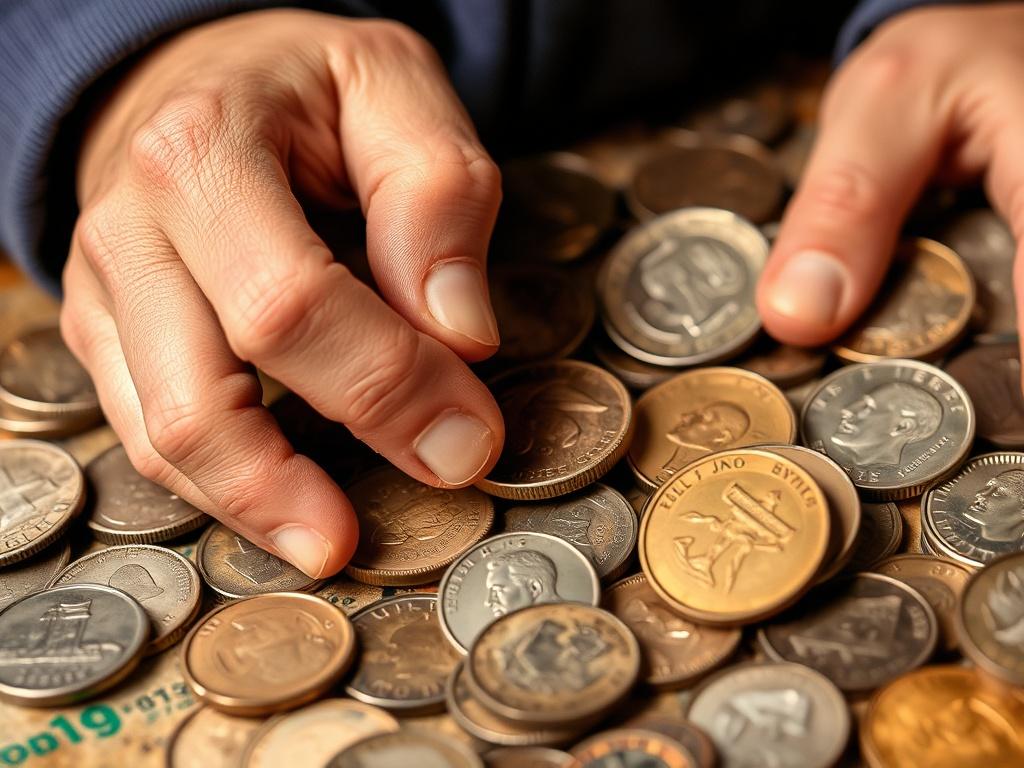
From Pocket Change to Treasure: How to Check the Value of Old Coins
You found an old coin in a drawer or inherited a dusty box and now you’re wondering: is this worth anything? That moment—when curiosity collides with the possibility of real value—is exciting. But it can also feel confusing. Best free coin identifier app are judged by a mix of metal content, condition, rarity, and collector taste. This guide walks you through smart, practical steps to check the value of old coins without getting overwhelmed or making expensive mistakes.
Read on and you’ll learn how to identify coins, estimate melt and collector value, use trusted resources, and decide when to seek professional help. I’ll include checklists, a grading table, and simple calculations you can follow at home. No jargon, no fluff—just the tools you need to separate the ordinary from the potentially valuable.
Why Some Old Coins Are Worth More Than Face Value
Coins carry value in two different ways. First, there’s intrinsic (or melt) value—the worth of the metal itself, whether silver, gold, or another precious metal. Second, and often more important for collectors, is numismatic value: what a collector will pay because of rarity, condition, historical interest, or an unusual error. A worn silver dollar might be worth several times its face due to silver content. An impeccably preserved copper penny with a rare date could be worth far more because collectors want it.
Market demand swings over time. A coin type that’s hot now can cool down, and vice versa. That’s why up-to-date sales data matters. It’s also why condition and clear documentation often matter as much as the date on the coin. Two identical coins can sell for very different prices if one is crisp and clean while the other is scratched or cleaned improperly.
First Steps: Identification
Before you get excited, identify the coin. That means reading the date, noting the country and denomination, and finding any mint marks, letters, or symbols. Those little details often hold the key to value. Use a magnifier and good light; even tiny mint marks can change everything.
Take clear photos from both sides, plus close-ups of the rim and any unusual features. Photographing helps you compare with online catalogs and lets experts give a more informed opinion if you ask for help. Keep a record of where you found the coin and any provenance—who owned it, how it was stored. Provenance can increase interest and value in some cases.
Identification Checklist
Use this short checklist as you examine each coin. It keeps the basic facts together so you can research effectively.
- Date and denomination: What year and face value are stamped on the coin?
- Country and language: Which country issued it and what script is used?
- Mint mark and placement: Small letters (e.g., D, S) that show the mint location.
- Design features and engraver marks: Portraits, symbols, and tiny letters.
- Weight and diameter (optional but helpful): Use a small digital scale and caliper if you have them.
- Any damage or cleaning signs: Look for unnatural shine, scratches, or filing.
| Item | Why it matters | Where to find it |
|---|---|---|
| Date | Limits which issues and rarities apply | Obverse (front) near portrait |
| Mint mark | Can hugely affect rarity and value | Often on reverse or near date |
| Metal type | Determines melt value and collector interest | Look for color and inscriptions (e.g., “999” or “Ag”) |
Grading Basics: Condition Drives Price
Condition—also called grading—has a massive influence on price. The same date and mint can range from nearly worthless to highly valuable purely because of the coin’s state. Professional grading services give coins a numerical grade and often encapsulate them in tamper-proof holders. That grade becomes a shorthand for buyers and sellers.
You don’t need a professional grade to estimate value, but you should learn the basic categories. Be honest with your eyes: a coin with heavy wear is worth different money than one with sharp details and original luster.
| Grade | Short description |
|---|---|
| P (Poor) | Heavily worn; date may be barely legible |
| G (Good) | Significant wear but design still identifiable |
| F (Fine) | Moderate wear; many design elements visible |
| XF/EF (Extremely Fine) | Light wear on high spots; strong detail |
| AU (About Uncirculated) | Almost no wear; traces of luster remain |
| MS (Mint State) | No circulation wear; graded 60–70 with varying marks |
Metal Content and Melt Value
When a coin contains silver or gold, the spot price of those metals gives a floor to its value. “Melt value” is how much metal you’d get if you melted the coin—rarely a good idea, but helpful to know. The formula is straightforward: convert the coin’s weight to troy ounces, multiply by purity (fineness), then multiply by the current spot price.
Here’s one clear example using a commonly encountered silver coin. This shows the arithmetic so you can do it yourself with any coin once you know weight and purity.
| Step | Example (Morgan-style silver dollar) | Calculation |
|---|---|---|
| Weight in grams | 26.73 g | — |
| Convert to troy ounces | 26.73 / 31.1035 | ≈ 0.859 oz troy |
| Multiply by purity | 0.859 × 0.900 | ≈ 0.7731 oz pure silver |
| Multiply by spot price (example $25/oz) | 0.7731 × $25 | ≈ $19.33 melt value |
Remember: melt value doesn’t capture collector premiums, which can be many times higher. Also, modern coins with little precious metal content might be worth mostly for collector interest instead.
Rarity, Varieties, and Errors
Rarity is not just about low mintage. Survival rate—the number of specimens that still exist in good condition—matters. A coin minted in high numbers can still be rare today if many were melted, lost, or damaged. Varieties (minor design differences) and mint errors (off-center strikes, double dies) can vastly increase interest and price.
To catch these, compare your coin to reputable images and descriptions from catalogs and auction records. If you suspect an error or rare variety, photographs and a second opinion from a dealer or grader are essential before you assume anything about value.
- Mintage vs. survival: look for both the original run and how many are likely to remain.
- Variety references: use specialist catalogs and die variety guides for subtle differences.
- Error coins: obvious mistakes attract collectors, but fakes and doctored errors exist—verify carefully.
Authentication and Professional Grading
If a coin looks like it might be valuable, professional grading services can authenticate and assign a grade. The two big names in the U.S. market are the Professional Coin Grading Service (PCGS) and Numismatic Guaranty Corporation (NGC). They encapsulate the coin in a sealed holder and provide a grade that buyers trust.
Grading has costs: submission fees, possible third-party inspection fees, and time. Generally, slab coins command higher prices and sell more easily, but for lower-value issues the fees may outweigh the benefit. Use grading when the expected sale price is high enough to justify it or when authentication is crucial.
Where to Research Prices and Sales Data
Don’t rely on a single source. Cross-check price guides, auction records, and real-world sales. Useful resources include:
- Price guides and catalogs (e.g., the Red Book for U.S. coins, Krause catalogs for world coins).
- Professional graders’ price guides (NGC, PCGS).
- Auction houses and their archives (Heritage, Stack’s Bowers) for realized prices.
- Online marketplaces—check completed/sold listings on eBay to see actual sale prices.
- Specialist forums and coin-collecting communities for niche advice.
| Source | Strength | Limitation |
|---|---|---|
| NGC/PCGS Price Guides | Reliable graded values | Less useful for ungraded coins |
| Auction Archives | Realized sale prices | May reflect rare, one-off sales |
| eBay Completed Listings | Current market transactions | Buyer/seller variability, fees affect price |
Selling or Buying: Practical Tips and Safety
If you plan to sell, get multiple opinions. Visit a reputable local coin dealer, request auction appraisals, and compare offers. Be aware of fees: auction houses and dealers charge commissions. If you want the highest price but don’t want the hassle, consigning to a well-known auction house can be the right path.
Avoid cleaning or polishing coins yourself. Many inexperienced attempts permanently reduce collector value. Likewise, be wary of “buy-now” offers that seem unusually low—or of buyers asking you to send coins before payment. Use escrow services for high-value transactions when possible.
- Get two or three independent appraisals for high-value coins.
- Keep original documentation and photos; it helps provenance.
- Use insured shipping and track packages for mailed coins.
- For online sales, factor in platform fees and shipping costs when pricing.
How to Photograph and Document Your Coins
Good photos increase credibility and attract serious buyers. Use a plain, neutral background and even lighting to avoid glare. Photograph both sides, the edge, and any marks or mint marks. Include a ruler or something for scale if the size might be unclear.
Record details in a simple inventory: date, mint mark, condition notes, weight, and any grading or provenance. Back up photos and notes in multiple places. This makes researching and selling later much easier.
Quick Practical Checklist
When you sit down with a pile of old coins, follow this quick order of operations to avoid mistakes and save time:
- Identify date, denomination, and mint mark.
- Photograph both sides and any close-up details.
- Assess condition honestly; use the grading table above.
- Check metal content—determine melt floor if applicable.
- Search price guides and auction archives for similar items.
- If the coin seems valuable, consider professional authentication.
- If selling, gather multiple offers and choose the best route (dealer, auction, private sale).
| Action | Estimated cost | When to use |
|---|---|---|
| Home research | Free | Always first |
| Professional grading | Moderate to high | Potentially valuable coins |
| Auction consignment | Commissions apply | High-value or rare items |
Coins Worth a Second Look
Some types of coins frequently turn up as unexpectedly valuable. Wheat pennies, early silver dollars, certain Liberty Head and Buffalo nickels, Morgan and Peace silver dollars, and pre-1933 U.S. gold coins are worth checking carefully. World coins with low mintage or historical importance can also surprise you. If you spot an unfamiliar coin with a small mint mark or an odd error, it’s worth researching.
Remember, a famous date or type alone doesn’t guarantee a big price. Condition and authenticity are the key drivers. Even for well-known rarities, documentation and certified grading boost buyer confidence—and often the price.
Conclusion
Checking the value of old coins is a blend of detective work and simple math. Start with careful identification and honest condition assessment. Use reliable references and real-world sales data to estimate value. When something looks valuable, get photos, seek expert opinion, and consider professional grading. Take your time—coins reward patience and attention to detail.
Above all, be cautious with cleaning and quick sales. A single careless move can shave years—and value—off a coin’s worth. With a little practice and the tools in this guide, you’ll be able to separate the ordinary from the potentially special and make smarter decisions whether you keep, sell, or consign.


You May Also Like

Angelas Journey: From Amsterdam to Australia via Japan